
To behave well in a live casino, treat the chat like a real table: be polite to the dealer and other players, know the rules before you bet, act within the decision timer and choose a table whose limits fit your budget. Live dealer games stream a real croupier to your screen, so most land-based manners still apply, but a few, such as dress codes and hand signals, disappear, and a few new ones, such as chat etiquette, take their place.
Updated October 2026. This guide now also covers what used to be our separate page on blackjack table etiquette, including hand signals and buying in at a land-based table. We corrected two old claims along the way: tips are not “typically anticipated” at online live tables (many have no tip option at all), and you should not hand cash straight to a dealer at a land-based table; lay it on the felt instead.
Playing Live
Playing live is the closest an online casino gets to a brick-and-mortar table. A croupier deals cards, spins the wheel or shakes the dice in a studio while cameras film the table, and software settles your bets automatically. Our guide to how a live dealer casino works explains the studio, cameras and card readers in detail.
The social side is real too. You can talk to the dealer and, at most tables, to other players through a chat box. That is where etiquette matters most, because the dealer reads every message and the whole table hears the reply. The table below sums up what carries over from a land-based casino and what changes.
| Situation | Land-based casino | Live dealer online |
|---|---|---|
| Talking to the dealer | Out loud, between hands | Typed chat; the dealer answers out loud |
| Signalling decisions | Hand signals the cameras can see | Buttons on screen within a countdown timer |
| Buying in | Cash on the felt, between hands | Your account balance; chips are virtual |
| Dress code | Some high-limit rooms expect smart dress | None |
| Tipping | Customary for dealers | Optional; many tables have no tip option |
| Phones and drinks | House rules apply at the table | Your choice, but they slow your decisions |
Be Sociable at the Table
Chat is what turns a stream into a table. Evolution, the largest live studio supplying US state-licensed casinos, describes it this way: “The dealer can see the messages and respond by speaking, while the other players in the game can only respond via the Chat system.” A short hello when you join is a nice touch and often gets a friendly greeting back.
Keep in mind that the dealer represents the studio and the casino. Their job is to run the game by the book, so listen to their announcements and follow the table’s rules. Good dealers also answer questions about how a bet works, which makes chat the quickest way to clear up a rule you are unsure about.
Treat other players the same way. In poker games against the house, a simple “well played” or “nice hand” costs nothing, and venting at other players after a loss helps nobody. A few chat rules cover almost every situation:
- No profanity or abuse. Chat is monitored. Evolution warns players who are rude and can close the session if it continues.
- No spam. Repeated messages, links or advertising get muted quickly.
- Strategy is your call. The dealer can explain the rules, but how you play your hand is your decision.
- Keep it impersonal. Croupiers are working on camera; keep comments about the game, not their appearance or private life.
- Use the table language. Large studios run tables in several languages; write in the language the dealer is speaking.
- Win and lose gracefully. Gloating after a big hit is as unwelcome as raging after a bad beat.
Chat is optional. If you would rather play quietly, most game windows let you mute or hide it. If unfamiliar terms keep popping up in the chat, our guide to online casino slang decodes the common ones.
Know the Rules
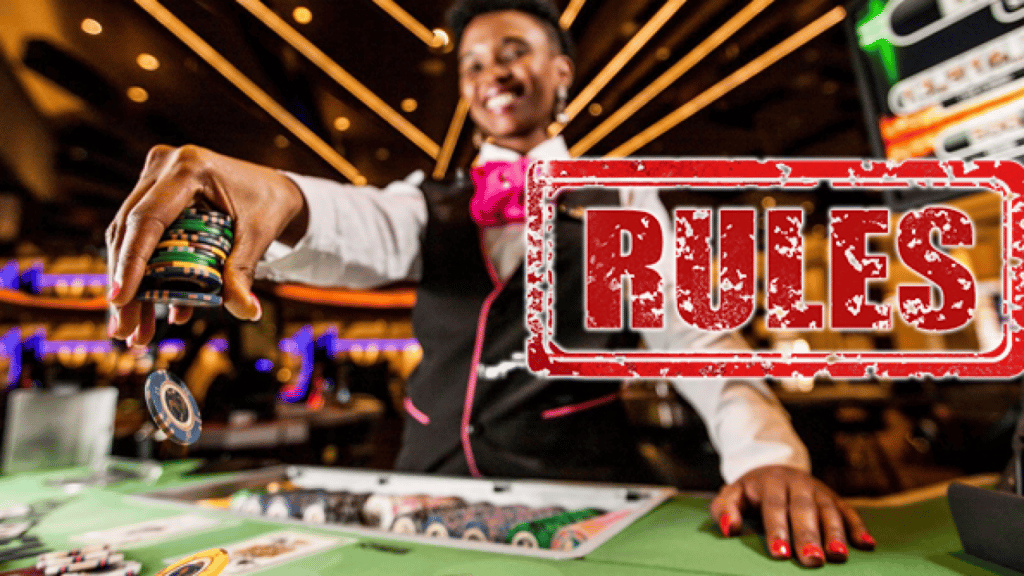
Nothing slows a live table down like a player who does not know how the game works. At blackjack every seated player gets a countdown for each decision; if the timer runs out, the table applies a default action, normally Stand, and the game moves on without you. That default is rarely the best play, and repeated delays hold up everyone else.
Learning beforehand is easy and costs nothing:
- Read the rules panel. Every live table has an info or help screen with the rules, payouts and limits.
- Practise on software versions. RNG (non-live) tables run the same games at your own pace, and many casinos offer them in demo mode.
- Learn basic strategy for blackjack. With basic strategy, a standard 8-deck live table where the dealer stands on soft 17 has a house edge of roughly 0.5%. Our live blackjack guide covers the rules and table types.
- Watch a few rounds first. Most lobbies let you open a table and watch before you bet, which shows you the betting window and the pace.
- Check side bets before you click. Side bets usually carry a much higher house edge than the main bet, so read the paytable first.
The same goes for roulette, baccarat and the poker games. Our hub for live dealer table games links the rules for each one, and the live poker guide covers Casino Hold’em, Three Card Poker and the other house-banked games.
Which Table to Join?
Once you know the rules, the next decision is the table. Every live table shows its minimum and maximum bet before you sit down, and the right choice depends on your budget rather than on what other players are betting.
A simple rule keeps you out of trouble: choose a table where your session budget covers at least 20 to 30 minimum bets. With a $200 budget, that points to a table with a $5 to $10 minimum. Sitting at a $25 table with the same $200 gives you only eight bets, and a normal losing streak can end the session in minutes.
Minimums vary a lot by site. As of 6 October 2026, the live blackjack lobbies of the offshore brands we review showed tables from $1 at BetOnline (up to $50,000 a hand at VIP tables), from $10 at Bovada and from $15 at Ignition, where the high-stakes tables started at $50 to $200. Our page on the live blackjack minimum bet compares the options. Those sites are offshore with no US state licence; each excludes some states, there is no state regulator to complain to and your funds are not protected.
If every seat at a blackjack table is taken, look for two alternatives:
- Bet Behind. Many seven-seat tables let you wager on a seated player’s hand. You win or lose with their decisions, so do not complain in chat when they play a hand differently from you. Our guide to Bet Behind explains how it works.
- Unlimited formats. Games such as Infinite Blackjack deal one shared set of first cards to everyone, after which each player makes their own decisions, so there is always a seat.
Do not take a seat you do not intend to use. At a seven-seat table, sitting out round after round blocks a player who wants to play. If you need a break, leave the seat and come back later.
Tipping the Dealer
Tipping is where land-based and online etiquette differ most. In a land-based casino, tipping dealers is customary, much like tipping a server in a restaurant. Michael Shackleford of the Wizard of Odds suggests about half your average bet per hour, and advises betting the tip for the dealer rather than handing it over, so the dealer wins it if your hand wins. He also notes that most casino dealers share tips, while a few casinos let dealers keep their own.
Here is how that works in practice. If your average bet is $10, his guideline comes to about $5 an hour. A common way to do it is to place a $1 chip for the dealer next to your bet now and then, especially after a good run.
Online, the picture is different. Tips do reach live dealers at some studios: an Evolution job advert for live casino dealers in Atlantic City lists pay of “up to $23/hr (Tips)”, including a “$10/hr guaranteed tip rate”. Whether you can tip from your screen, though, depends on the game and the casino. Many live tables have no tip option, and nobody at those tables expects one. Where a tip option exists, a small tip after a good session is a kind gesture, never an obligation. Our guide to tipping casino dealers covers the amounts and the land-based customs in more detail.
Blackjack Table Etiquette

Blackjack has more etiquette than any other table game, because several players share one dealer and act in turn. Online, the software prevents most of the classic mistakes: you cannot touch the cards, move your bet after the deal or act out of turn. What is left is mostly about pace and manners.
At a live online blackjack table
- Bet early in the window. Placing your chips in the last second risks missing the round.
- Decide quickly. Know your basic strategy so you act well inside the timer.
- Leave other players’ hands alone. The Wizard of Odds puts it plainly: “In blackjack do not rebuke another player for the way they play their hand.”
- Keep it friendly with the dealer. The dealer is not your opponent in any personal sense; they deal the cards and follow fixed rules for their own hand.
At a land-based blackjack table
In a land-based casino the rules are stricter, because surveillance cameras record every decision. Hand signals exist so that, in the Wizard of Odds’ words, “the camera and the floor people can understand what’s going on at the game.” Saying “hit” is not enough on its own.
| Decision | Face-up shoe game (most tables) | Face-down hand-held game |
|---|---|---|
| Hit | Tap the table | Lightly scrape the corner of the cards on the felt |
| Stand | Wave your hand, palm open, parallel to the table | Slide your cards under your bet without lifting the chips |
| Double or split | Place the matching bet next to, never on top of, your original bet | Turn your cards face up above your bet, then add the matching bet |
| Touching cards | Never touch them | One hand only |
A few more rules apply only in person:
- Buy in between hands. If you sit down mid-hand, wait for it to finish, then lay your cash on the felt and ask for chips. Do not try to hand money directly to the dealer; the dealer counts it out on the table and changes it into chips.
- Never touch your bet once the first card is dealt. Adding, removing or adjusting chips after the deal will draw a warning at best.
- Know the chip colours. Red chips are usually $5, green $25 and black $100.
- Colour up when you leave. Hand in neat stacks of small chips between hands and ask for larger denominations, which makes the count quicker for the dealer.
- Keep your voice down. Shouting at the dealer or other players gets you asked to leave.
None of these change the maths of the game, but they keep the table running smoothly and avoid disputes about what you meant to do.
Casino Etiquette
Many land-based casinos keep a dress code for their high-limit rooms, but a live casino has none. Wear whatever you like; the dealer cannot see you, because your own camera and microphone are never used.
Drinking and gambling often go together, and land-based casinos have long served drinks at the tables. Online, nobody brings the drinks, but the risk is the same: alcohol makes it easier to chase losses, raise stakes and type something in chat you will regret. Keep drinks moderate or wait until after the session.
Phones are another difference. Land-based casinos set their own house rules on phones at the tables, so follow the posted sign or the dealer’s instruction, and never photograph other players. At home, the risk is distraction: answering messages while the timer runs is the most common reason live players miss a decision.
Finally, check your connection before you sit down. If it drops, bets already accepted stay in play and are settled on the server, and you can check the result in your bet history when you reconnect. A stable Wi-Fi or wired connection avoids most of these interruptions.
Play Within Your Limits
Good etiquette includes how you treat your own money. Set a deposit and time limit before you join a table, and stop when you reach it, win or lose. Live games are slower than software versions, which helps, but losses still add up.
Bonuses deserve a quick check too. At Bovada and Ignition, live dealer bets count 0% towards bonus wagering, and casino bets are capped at 20% of the deposit while a bonus is active, so playing live tables with a bonus running can lock up your balance without clearing anything. Read the bonus terms before you take an offer if you mainly play live.
Where you play also matters. Eight states have legalised online casinos; seven markets are live (NJ, PA, MI, WV, CT, DE, RI); Maine legalised a tribal-only market (LD 1164: became law without the governor’s signature in January 2026, effective 29 Jul 2026) that has not launched (Oct 2026). Players must be 21 in those markets, and state-licensed casinos must offer deposit, loss and time limits and honour their state’s self-exclusion programme; offshore sites sit outside those programmes. If you are worried about someone’s gambling, including your own, call, text or chat with the National Problem Gambling Helpline on 1-800-MY-RESET (1-800-697-3738). Our responsible gambling page lists more tools.
Summary
Land-based casinos can feel intimidating, with security, dress codes and unwritten rules. Live dealer games are far more relaxed, but they still have a social side, and good manners make the table better for everyone.
The short version: be polite in chat, learn the rules before you bet, act inside the timer, pick a table you can afford, tip only if you want to and the table allows it, and keep drinks and distractions in check. If you play blackjack in person as well, use hand signals, keep your hands off the cards and your bet, and buy in between hands.
FAQ
How should you behave in a live casino?
Keep the chat polite, learn the rules before you sit down, decide quickly when the timer runs, pick a table whose minimum suits your bankroll and never criticise how another player plays. The dealer represents the studio, so follow their instructions just as you would in a land-based casino.
Can the live dealer see or hear me?
No. Your camera and microphone are not used. The dealer reads typed chat messages on a screen in the studio and answers out loud, so everyone at the table hears the reply.
Do you have to tip a live dealer online?
No. Tipping is optional and many live tables have no tip option at all. Where a table offers one, a small tip after a good session is a kind gesture, but nobody should expect it, and you should never tip money you need for your own budget.
What happens if I am too slow to make a decision at live blackjack?
Each decision has a countdown timer. If it runs out, the table applies a default action, normally Stand, and the game moves on. Repeated delays hold up the other players, so learn basic strategy before you take a seat.
Can you get kicked out of a live dealer game?
Yes. Chat is monitored, and Evolution says rude players are warned and can have their session closed if the behaviour continues. Abuse of the dealer or other players, spam and profanity are the usual reasons.
Is it rude to touch your cards at a blackjack table?
In the usual face-up shoe game, yes: never touch the cards, and signal instead by tapping the table to hit or waving your hand flat to stand. In a face-down hand-held game you may hold the cards, but with one hand only.
Sources
- Evolution: live casino games and FAQ (chat: dealer sees messages and responds by speaking; chat monitored)
- Evolution careers: Live Casino Dealer, Atlantic City (up to $23/hr incl. tips, $10/hr guaranteed tip rate)
- Wizard of Odds (Michael Shackleford): Gambling etiquette (hand signals, touching cards, tipping, chip colours)
- Wizard of Odds: Blackjack rules video, part 1 (hand signals for camera and floor staff; buying in)
- Wizard of Odds: blackjack house edge and rule variations
- Bovada: bonus terms and conditions (game contributions)
- Ignition: bonus terms and conditions (game contributions)
- Gambling Insider: Maine tribal online casinos, LD 1164
- NCPG: National Problem Gambling Helpline 1-800-MY-RESET
Spotted an error? Email [email protected] with the page address. Verified corrections are made with a dated note.