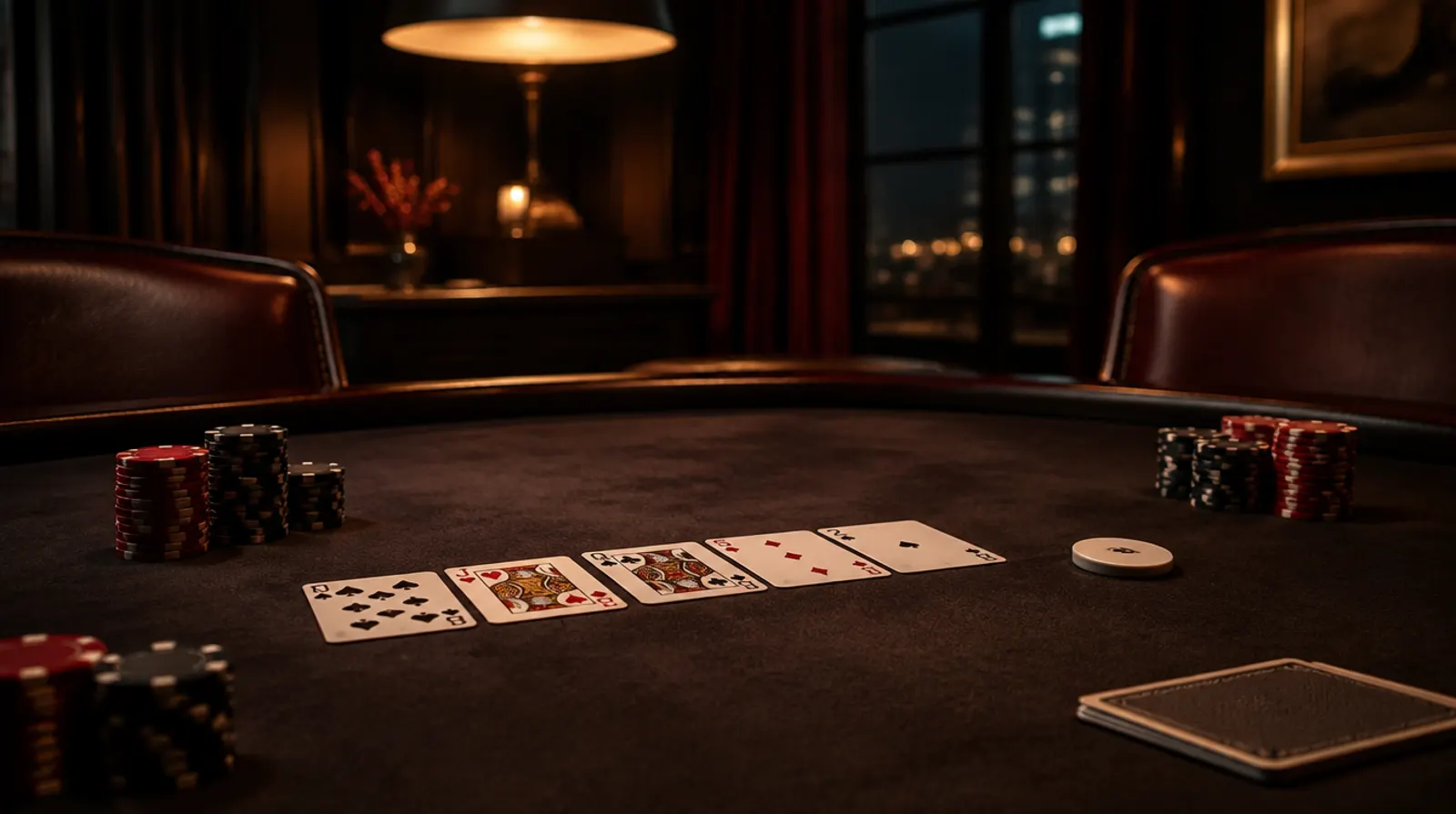
The four most exciting poker tournament moments of all time, judged by their drama and their impact on the game, are Chris Moneymaker’s 2003 World Series of Poker (WSOP) Main Event win, Johnny Chan’s back-to-back Main Event titles in 1987 and 1988, Phil Hellmuth stopping Chan’s bid for a third straight title in 1989, and the first $1 million buy-in tournament, the Big One for One Drop, in 2012. Each changed how poker is played, watched or marketed.
Below, each moment with the verified facts: field sizes, prizes and the actual cards on the deciding hand, plus why it still matters.
The four moments at a glance
| Moment | Year | Field | Prize | Why it matters |
|---|---|---|---|---|
| Chris Moneymaker wins the WSOP Main Event | 2003 | 839 | $2,500,000 | Online qualifier beats the pros and sparks the poker boom |
| Johnny Chan wins back-to-back Main Events | 1987 and 1988 | 152 in 1987 | $625,000 and $700,000 | Still the last back-to-back champion; the 1988 hand appears in Rounders |
| Phil Hellmuth denies Chan a third title | 1989 | WSOP Main Event | $755,000 | Youngest champion at the time (24) |
| Big One for One Drop | 2012 | 48 | $18,346,673 | First $1 million buy-in; $111,111 per entry to charity |
1. Chris Moneymaker wins the 2003 WSOP Main Event
No single result changed poker more. Chris Moneymaker, a comptroller from Spring Hill, Tennessee, won his seat in the $10,000 Main Event through an $86 online satellite on PokerStars. (His autobiography’s title refers to a $40 satellite; he later said he had misremembered the figure.) The 2003 Main Event was his first live poker tournament.
He outlasted a field of 839 entrants, knocking out Phil Ivey on the way to the final table, and met professional Sam Farha heads-up. On the final hand, Moneymaker held 5♦4♠ against Farha’s jack-ten. A flop of jack-five-four gave Moneymaker two pair against Farha’s top pair. An eight on the turn changed nothing, and a five on the river filled Moneymaker’s full house. Moneymaker won $2,500,000; Farha took $1,300,000 for second.
What followed became known as the “Moneymaker effect”. If an accountant could turn $86 into a world title, anyone could, and players flooded online poker sites. Main Event fields jumped to 2,576 in 2004, 5,619 in 2005 and 8,773 in 2006. The record has since moved on: the 2024 Main Event drew 10,112 entries.
2. Johnny Chan wins back-to-back Main Events (1987 and 1988)
Johnny Chan won the 1987 Main Event against a field of 152, beating Frank Henderson heads-up for $625,000. He was the first foreign national to win the event. A year later he was back at the final table, this time facing Erik Seidel, a New Yorker in his first World Series.
That 1988 final hand is one of the most replayed in poker. Holding J♣9♣, Chan limped, and Seidel checked his option with Q♦7♥. The flop came Q♠10♠8♦: Chan had flopped the nut straight, Seidel top pair. Chan checked and called, letting Seidel lead the betting; the turn was a 2 and the river a 6. Seidel moved all in on the river, Chan called instantly, and won $700,000 and his second straight title.
The hand found a second life ten years later. A tape of the 1988 heads-up match plays in the 1998 film Rounders, where Matt Damon’s character studies Chan’s trap. Seidel went on to win ten WSOP bracelets and enter the Poker Hall of Fame. Chan, who also reached ten bracelets, remains the last player to win the Main Event in consecutive years.
3. Phil Hellmuth stops Chan’s three-peat (1989)
In 1989 Chan reached the final table again, one step from three straight world titles. Standing in his way was 24-year-old Phil Hellmuth. Heads-up, Hellmuth’s pocket nines faced Chan’s A♠7♠. The board came K-K-10-Q-6, no ace and no flush, and Hellmuth’s nines held.
The win paid $755,000 and made Hellmuth the youngest Main Event champion to that point. His record lasted until Peter Eastgate won at 22 in 2008; Joe Cada lowered it to 21 a year later. Hellmuth went on to win a record 17 WSOP bracelets, the latest on 2 July 2023, and Chan never got closer to a third Main Event title than that 1989 final.
Honourable mention: the Big One for One Drop (2012)
Not a single hand but a landmark event. For the 2012 WSOP, organisers created the Big One for One Drop, the first poker tournament with a $1,000,000 buy-in. Of each buy-in, $111,111 went to One Drop, a non-profit focused on access to clean water founded by Cirque du Soleil founder Guy Laliberté.
Forty-eight players entered. The final table finished on 3 July 2012, when Antonio “The Magician” Esfandiari beat Sam Trickett heads-up to win $18,346,673, at the time the largest single prize in poker history. Trickett received $10,112,001. The event returned with a $1 million buy-in in 2014, when Dan Colman beat Daniel Negreanu for $15,306,668, and in 2018, when Justin Bonomo won $10,000,000.
What these moments have in common
- Television. Each became famous because people could watch it: ESPN coverage with hole-card cameras in 2003, archive footage of 1988 in Rounders, and ESPN coverage of the One Drop final table.
- Amateurs versus pros. Moneymaker against Farha and Seidel’s first Main Event against a reigning champion are the stories poker fans retell most.
- Traps and patience. Chan’s slowplay in 1988 is still taught as the classic example of letting an opponent bluff or overvalue a hand. Our guide on how to become an expert poker bluffer and the article on when to bluff in poker explain the other side of that play.
Tournament fields are far larger today than in Chan’s era, which makes repeat wins even harder. If these finals make you want to try a live event, start with our guides to getting into poker tournaments and live poker tournament strategy, check the poker hand rankings, and see how today’s big tours work in our World Poker Tour and European Poker Tour guides.
Poker tournaments are gambling, even for skilled players. Set a budget before you play, and if it stops being fun, the National Problem Gambling Helpline is 1-800-MY-RESET (1-800-697-3738); our responsible gambling page lists more support.
Frequently asked questions
What is the most famous poker tournament moment?
Chris Moneymaker’s 2003 World Series of Poker Main Event win is usually ranked first. An amateur who qualified through an $86 online satellite on PokerStars beat 838 other players and won $2.5 million, and the ‘Moneymaker effect’ that followed helped the Main Event field grow to 8,773 entrants by 2006.
What was the final hand of the 2003 WSOP Main Event?
Chris Moneymaker held 5♦4♠ against Sam Farha’s jack-ten. The board ran jack, five, four, eight, five, giving Moneymaker a full house, fives full of fours, against Farha’s pair of jacks.
Who is the last player to win back-to-back WSOP Main Events?
Johnny Chan, who won in 1987 and 1988. He then finished second to Phil Hellmuth in 1989, narrowly missing a third straight title.
Which poker hand is shown in the movie Rounders?
The 1988 WSOP Main Event final hand between Johnny Chan and Erik Seidel. Chan flopped a straight with J♣9♣ on Q-10-8, slowplayed it, and Seidel moved all in with top pair on the river.
Who is the youngest WSOP Main Event champion?
Joe Cada, who won in 2009 at 21. Phil Hellmuth set the record at 24 in 1989, and it stood until Peter Eastgate won at 22 in 2008.
What was the biggest buy-in poker tournament?
The Big One for One Drop at the 2012 WSOP cost $1,000,000 to enter, with $111,111 of each buy-in going to the One Drop charity. Antonio Esfandiari won $18,346,673 from 48 entrants.