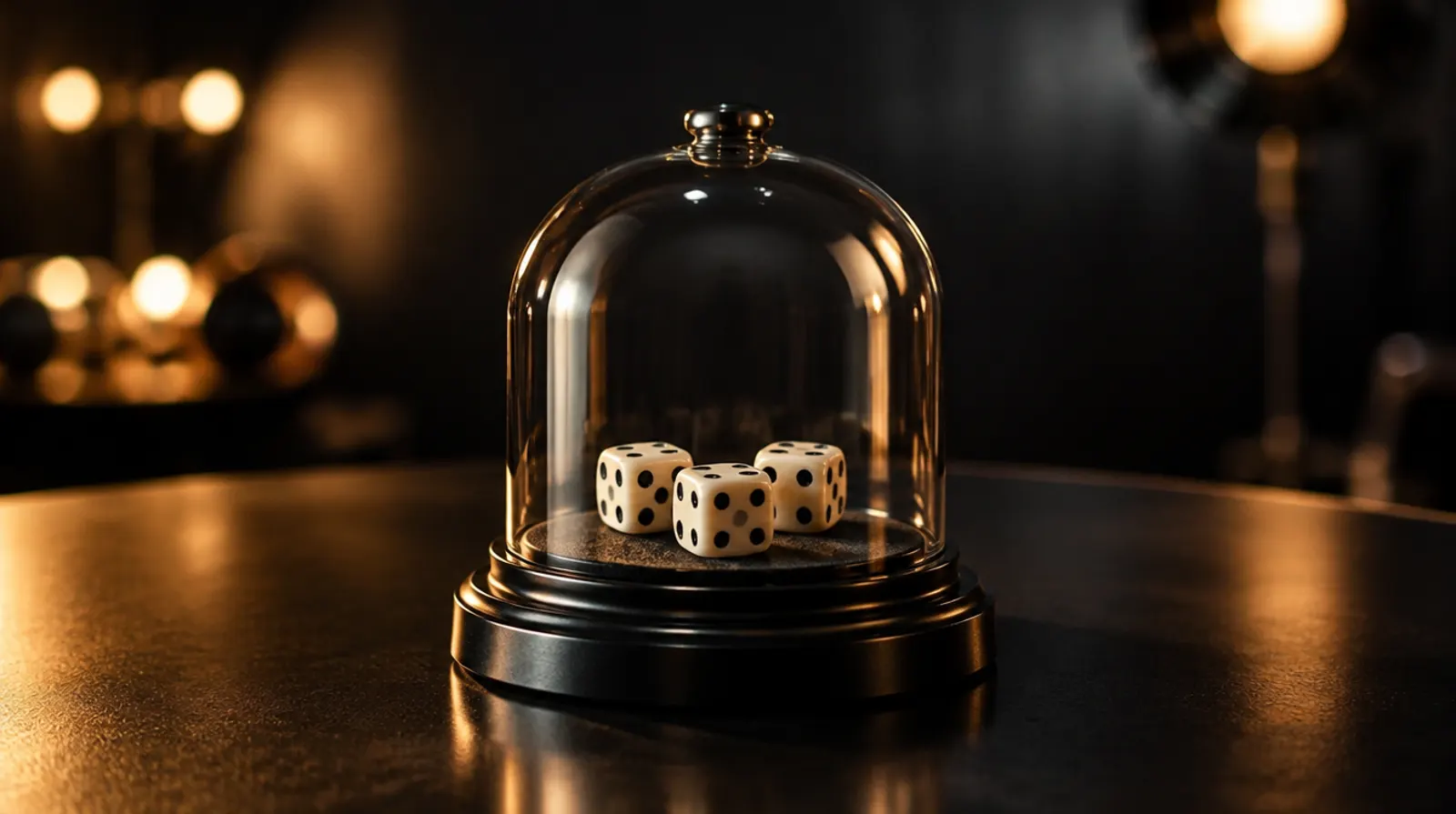
Jhandi Munda is a six-dice gambling game from India and Nepal. Players bet on one of six symbols, the banker rolls six dice marked with those symbols, and a bet wins according to how many dice show its symbol. It is the South Asian cousin of the British game Crown and Anchor, and in Nepal it goes by the name langur burja.
This guide explains the symbols, how a round runs, the probability of every result from zero to six matches, how different pay tables change the odds, and how online and live dealer versions work. It is written for English-speaking readers who want to understand the game; it does not point anyone to a place to bet.
What Is Jhandi Munda?
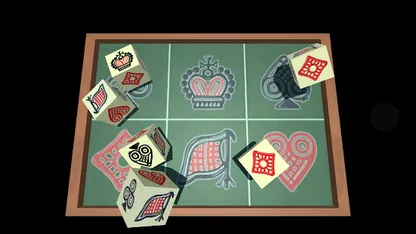
The name joins two of the symbols: jhandi means flag and munda means head. Street and festival versions use a cloth or board divided into six squares, one per symbol, and six identical dice that the banker shakes in a cup or bowl. In Nepal, the Himalayan Times notes, langur burja is played especially during Dashain and Tihar, although it appears year-round.
Names for the symbols vary by region. The Himalayan Times lists them as pan (heart), surat (spade), langur or jhanda (flag), burja (crown), eet (brick, the diamond) and cheed (club). Indian versions usually draw the munda as a face. Whatever the artwork, there are always four card suits plus two picture symbols.
| Symbol | Common names |
|---|---|
| Heart | Pan |
| Spade | Surat |
| Diamond | Eet (brick) |
| Club | Cheed |
| Flag | Jhandi, jhanda or langur |
| Face or crown | Munda or burja |
How to Play Jhandi Munda
- Stake a symbol. Put your money on one or more of the six squares. Most games let several players back the same symbol.
- The roll. Once bets are closed, the banker shakes all six dice together and reveals them.
- Count your matches. For each symbol you backed, count the dice showing it, from zero to six.
- Settle. Bets with enough matches are paid at the house rate for that count. Every other stake goes to the banker.
That is the whole game. There are no decisions after the dice roll, no skill element in the result and no way to influence which symbol lands. Each roll is independent of the last.
Jhandi Munda Probabilities
With six fair dice and a one-in-six chance per die, the number of dice showing your symbol follows a simple binomial pattern. These are our own calculations:
| Dice showing your symbol | Probability | About 1 in | At least this many |
|---|---|---|---|
| 0 | 33.49% | 3.0 | 100% |
| 1 | 40.19% | 2.5 | 66.51% |
| 2 | 20.09% | 5.0 | 26.32% |
| 3 | 5.36% | 18.7 | 6.23% |
| 4 | 0.80% | 124 | 0.87% |
| 5 | 0.064% | 1,555 | 0.066% |
| 6 | 0.002% | 46,656 | 0.002% |
Two facts follow. First, your symbol shows on exactly one die per roll on average, because six dice times a one-in-six chance equals one. Second, one match is the single most likely outcome (40.2%), more likely than no match at all (33.5%).
Jhandi Munda Payouts: Why the Pay Table Matters
There is no single official pay table. The Himalayan Times describes a game in which backers of any symbol that appears receive double their money; other hosts pay only when a symbol shows on two or more dice, with the multiple rising with each extra die. Online games set their own tables. The table you play decides whether the game is fair, generous or very expensive, as these worked examples show (return per unit staked, stake included):
| Pay rule | Return to player | Who has the edge? |
|---|---|---|
| k:1 for k matches, from one match (Crown and Anchor style) | 166.5% | The player, by a huge margin |
| Double your money on one or more matches | 133.0% | The player |
| Return of k times the stake for k matches (stake included) | 100.0% | Neither side: break-even |
| Pays k:1 for k matches, two or more matches only | 86.1% | House edge of 13.9% |
| Stake times k returned, two or more matches only | 59.8% | House edge of 40.2% |
The first rows explain a common mistake. Many websites copy the Crown and Anchor pay table (1:1, 2:1, 3:1) onto Jhandi Munda and quote its 7.87% house edge. That pay table only works with three dice; applied to six dice it would hand the player a large advantage, so no banker can actually use it. Treat any Jhandi Munda page that quotes 7.87% with suspicion, and do the sum yourself: multiply each payout by the probability in the table above and add them up.
Worked example
Suppose a table pays 2:1 for two matches, 3:1 for three and so on up to 6:1, keeps all stakes on zero or one match, and you bet $10 a roll. On average, 100 rolls return about $861 of your $1,000 staked, an expected loss near $139. The most common results, no match or one match, together lose your stake 73.7% of the time, which is why sessions on such a table tend to drain steadily.
Jhandi Munda vs Crown and Anchor vs Sic Bo
| Game | Dice | Typical single-symbol pay | House edge |
|---|---|---|---|
| Jhandi Munda | Six, with symbols | Varies by host | Depends on the pay table (see above) |
| Crown and Anchor | Three, with symbols | 1:1, 2:1, 3:1 for one, two, three matches | 7.87% (Wizard of Odds) |
| Sic Bo single number | Three, numbered | Same as Crown and Anchor | 7.87% |
Wizard of Odds notes that Crown and Anchor has the same rules as the single-number bets in Sic Bo, with pictures instead of numbers. If you want a casino dice game with published, fixed odds, Sic Bo is the closest relative you will find in most live casinos.
Jhandi Munda Strategy: What Works and What Does Not
- No symbol is due. Dice have no memory. A symbol that has missed ten rolls is exactly as likely as any other on the next.
- Spreading bets does not help. Backing several symbols raises how often something wins but leaves the edge on every unit staked unchanged.
- Read the pay table first. The only real decision is whether a table’s payouts are worth playing at all.
- Beware of “high-risk” and “low-risk” systems. Earlier versions of this page suggested betting ranges such as “12 to 17” or “Big and Small”; those are Sic Bo totals and do not exist in Jhandi Munda.
- Set limits. Rounds are quick, so decide a budget and a stopping point before you start. Our responsible gambling guide lists practical tools.
Jhandi Munda Online and Live Dealer Versions
Online, Jhandi Munda appears in two forms: free dice-roller and social apps, and real-money versions offered mainly by India-facing sites, either as RNG games or with a live host rolling the dice. Each publishes its own pay table and return figure, so the numbers above are the way to check them.
Ezugi, the Evolution-owned studio behind many Indian live games, does not list Jhandi Munda among its games. We checked its public games page on 6 October 2026 and archived copies of its game pages back to 2023. Its Indian line-up covers Teen Patti, Andar Bahar and Lucky 7.
US players will not find the game at the offshore sites we review. On 6 October 2026 none of Bovada, Ignition, MyBookie or BetOnline listed Jhandi Munda in its casino or live lobby, which is why this page carries no casino list. For dice games available to US players, see our Sic Bo guide; for the wider range of live tables, our live casino games guide.
Is Jhandi Munda Legal?
It depends entirely on where you are. Indian law: the Promotion and Regulation of Online Gaming Act, 2025 (Act No. 32 of 2025) prohibits offering online money games, and offline gambling is governed by state laws that differ from state to state. Nepal treats the game as a festival tradition, but that does not make every cash game lawful. For the US, eight states have legalised online casinos; seven markets are live (NJ, PA, MI, WV, CT, DE, RI); Maine legalised a tribal-only market (LD 1164: became law without the governor’s signature in January 2026, effective 29 Jul 2026) that has not launched (Oct 2026). Playing for fun with friends, with no money involved, is the safe way to enjoy the game.
Jhandi Munda Terms
- Jhandi (jhanda, langur): flag symbol.
- Munda (burja): head symbol, drawn as a face or a crown.
- Banker: whoever rolls, collects losing stakes and pays winners.
- Match: one die showing your chosen symbol.
- Pay table: a list of what each number of matches pays.
- Langur burja: the Nepali name for the game.
Jhandi Munda FAQ
How do you play Jhandi Munda?
Players put their stakes on one or more of six symbols marked on a board: heart, spade, diamond, club, flag (jhandi) and a face or crown (munda). The banker shakes six dice, each carrying the same six symbols, and pays every bet whose symbol shows on enough dice according to the house’s pay table. All other stakes are lost.
How many dice are used in Jhandi Munda?
Six. Each die has the same six symbols, so on average your chosen symbol appears on exactly one die per roll. The British cousin, Crown and Anchor, uses only three dice.
What are the payouts in Jhandi Munda?
They vary by host. Some street and festival games pay from a single match, others pay only when your symbol shows on two or more dice, with the multiple rising with each extra match. Because the numbers differ so much, check the pay table before betting and use our probability table to see what it is worth.
What is the probability of winning at Jhandi Munda?
Your symbol appears at least once in 66.5% of rolls and at least twice in 26.3%. The chance of no match is 33.5%, of exactly one 40.2% and of exactly two 20.1%. Three or more matches happen in only 6.2% of rolls.
Is there a strategy to win Jhandi Munda?
No. Each roll is independent and every symbol has the same chance, so no symbol is ‘due’ and spreading bets across symbols does not change the house edge. The useful choices are to read the pay table, keep stakes small and stop at a set limit.
Is Jhandi Munda the same as Crown and Anchor?
They are close relatives. Both use dice marked with card suits plus two picture symbols. Crown and Anchor rolls three dice and pays 1:1, 2:1 or 3:1 for one, two or three matches, a 7.87% house edge per Wizard of Odds. Jhandi Munda rolls six dice, so its pay tables have to be different.
What does Jhandi Munda mean?
Jhandi means flag and munda means head, the names of two of the six symbols. In Nepal the same game is called langur burja, after the flag (langur or jhanda) and crown (burja) symbols.
Gambling should be entertainment. If it stops being fun, call or text the National Problem Gambling Helpline at 1-800-MY-RESET (1-800-697-3738).