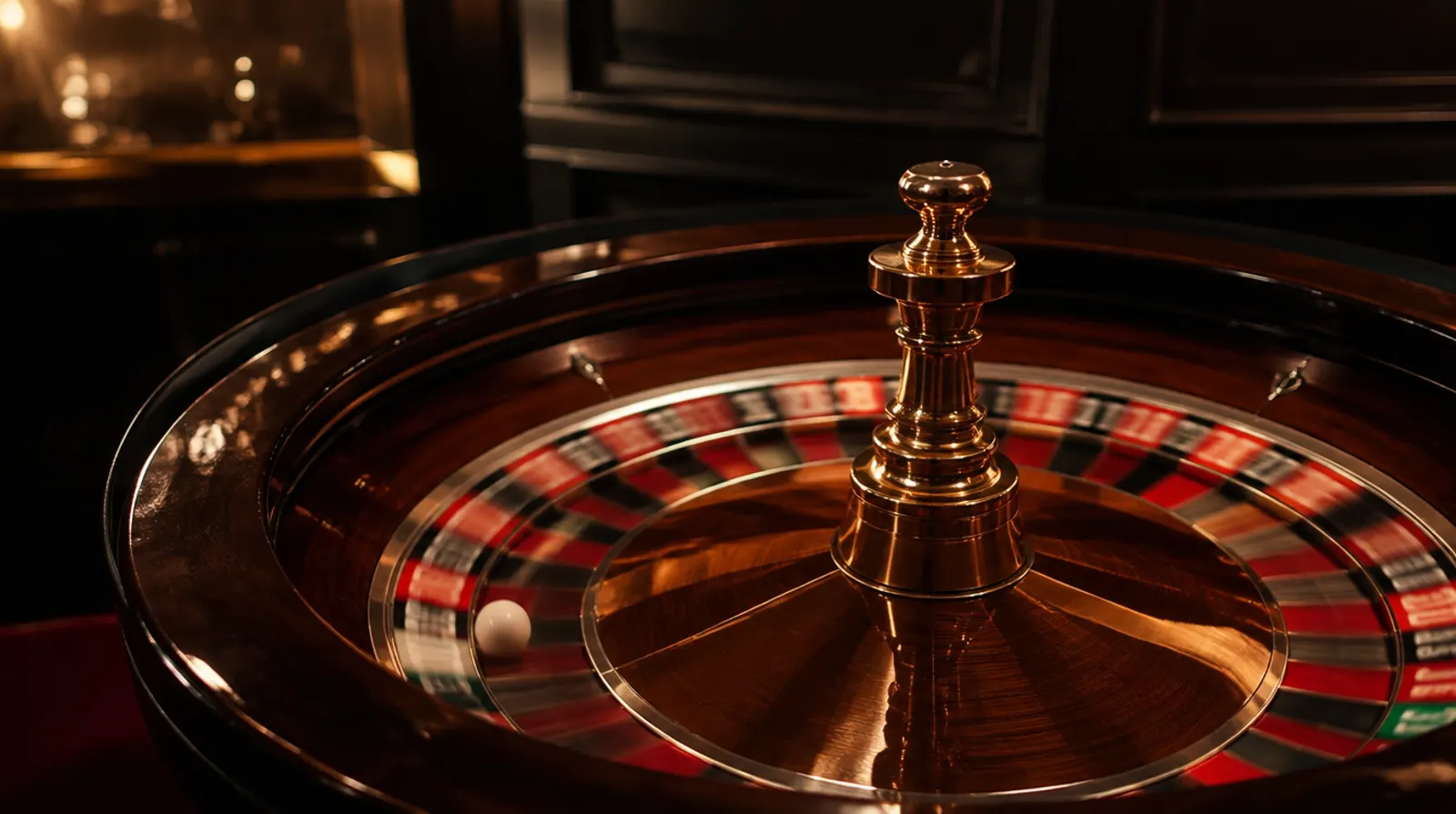
The roulette dolly marker predicting system tries to forecast the next number by copying the last two “moves” the dolly (the marker the dealer places on the winning number) made across the betting layout, then spreading about 18 chips around the projected spots. It cannot work on a fair wheel. The layout position of the last number has no influence on the next spin, so any 18 straight-up chips win 18 times in 37 on average and lose 2.70% of the stake, exactly like any other set of bets. Our simulation of the system over almost 1.9 million spins returned a loss of 2.67%, the house edge within normal statistical noise.
This page explains what the dolly marker is, how the system is meant to work, why it fails, and what does change your results at roulette. For the full game, see our live roulette guide.
Updated October 2026. We rewrote this page as an explainer: the earlier version presented the system as a way to profit, which the maths does not support.
What is the dolly in roulette?
The dolly (also called the marker or puck) is a small weighted piece the croupier places on the winning number on the betting layout after each spin. It tells players which number won and stops anyone adding bets to the winning spot while losing chips are cleared and winners are paid. When the dolly is lifted, betting opens for the next round.
At live online tables, the dolly is usually replaced by an on-screen highlight of the winning number and a results panel. Behind the screen, the logic is identical: the winning number is marked, payouts are settled, and the betting timer opens again.
How the dolly marker system is supposed to work
The system treats the betting grid, three columns by twelve rows, as a map. Each new winning number is a “move” from the previous one: up, down, left, right or one of four diagonals, or a direct repeat. The method then:
- Takes the last two results and describes the move between them, for example #1 to #17 as “up and to the right”.
- Projects the same move forward from the latest number, wrapping round the edges of the layout if needed.
- Places about 18 straight-up chips around the projected spot and around the last number, in case it repeats.
- Repeats after every spin, always using only the two most recent moves.
Eighteen chips were the old version’s choice, because a straight-up win pays 35:1: one hit returns 36 chips, a net gain of 18. Its idea was that frequent hits on “forming patterns” would add up to a profit.
Why it cannot predict anything
The betting layout is a table, not the wheel. Numbers that sit next to each other on the grid, such as 17 and 20, sit far apart on a European wheel. A ball has no idea where the dolly sat last time, and the wheel has no memory of the previous spin. Each spin on a fair single-zero wheel gives every number a 1 in 37 chance.
That means the “pattern” the system follows is drawn after the fact. Any sequence of random numbers will produce shapes on the grid, just as random dots form constellations. Patterns that “last for a while” are what randomness looks like, not evidence of a trend.
The maths of an 18-chip spread
Whichever 18 numbers you pick, by dolly moves, birthdays or a random draw, the result per spin on a European wheel is the same:
| Outcome | Probability | Result (18 chips staked) |
|---|---|---|
| One of your 18 numbers hits | 18/37 = 48.65% | +18 chips (36 returned) |
| Any of the other 19 pockets (including 0) | 19/37 = 51.35% | -18 chips |
| Expected result per spin | -18/37 = -0.486 chips, or -2.70% of the stake |
The structure looks very similar to betting on red or black: you win slightly less than half the time and are paid even money on the total stake. The edge is the same 2.70%. On an American double-zero wheel, 18 chips win 18 times in 38 and the loss rises to 5.26%.
We tested it: almost 1.9 million simulated spins
To check the theory, we coded a version of the system and ran it against simulated spins of a fair European wheel. After each spin it took the last two results, projected the move on the 3×12 grid (wrapping round the edges, as the original method suggests), and covered the 18 numbers closest to the projected spot and the last number.
| Measure | Simulation result | Theory for any 18 numbers |
|---|---|---|
| Spins bet | 1,892,962 | |
| Hit rate | 48.67% | 48.65% |
| Return on total stake | -2.67% | -2.70% |
The small gap is ordinary sampling noise. The system performed exactly as well as picking 18 numbers at random, which is the point: it adds effort, not edge.
Why the system feels like it works
- High hit rate. Covering nearly half the wheel means you “win” about every other spin, which feels like the method is reading the table.
- Memorable streaks. A run of three or four hits stands out; the steady trickle of losses does not.
- Hindsight. After a result lands, it is always possible to find a “move” that explains it, because there are only eight directions and a repeat.
- Short sessions. Over 20 or 30 spins, results swing widely, so many players finish a session ahead and credit the system.
These are the same reasons hot and cold numbers feel meaningful. Our roulette myths guide covers the gambler’s fallacy, including the 1913 Monte Carlo run of 26 blacks.
Dolly marker system vs other roulette systems
| System | What it changes | Effect on house edge |
|---|---|---|
| Dolly marker predicting | Which numbers you cover | None (2.70% on a European wheel) |
| Hot and cold numbers | Which numbers you cover | None |
| Martingale | Bet size after losses | None; risk of large losses at table limits |
| Fibonacci | Bet size after losses | None |
| Choosing a French table with La Partage | Game rules | Halves the edge on even-money bets to 1.35% |
| Choosing European over American | Game rules | Cuts the edge from 5.26% to 2.70% |
The only “systems” that move the numbers are choices about the game itself. See Fibonacci roulette strategy and the reverse Martingale for how staking plans behave, and types of roulette tables for the best-odds formats.
Can a wheel ever be predicted?
Only in narrow physical cases that do not apply to the dolly method. Historically, players such as Joseph Jagger in the 1870s found mechanically biased wheels, and researchers have studied predicting a ball’s landing sector from its speed. Those approaches rely on the physical wheel, not on where the last number sat on the layout. Modern casino wheels are built and maintained to minimise bias, and using electronic devices to predict outcomes is illegal in some jurisdictions, such as Nevada.
If you enjoy using the dolly method anyway
Following patterns can be a fun way to choose numbers, as long as you treat it as entertainment with a known price. Some practical points:
- Play it on a single-zero table; the same method costs nearly twice as much on a double-zero wheel.
- Remember an 18-chip spread is a large stake per spin: at $1 a chip, that is $18 every round, with an expected cost of about 49 cents a spin.
- Keep the chip count fixed rather than raising it after losses.
- Set a budget and stop when you reach it.
For the numbers and wheel order behind the layout, see how roulette numbers work. Roulette is a game of chance with a fixed house edge; use the tools in our responsible gambling guide, and in the US call the National Problem Gambling Helpline at 1-800-MY-RESET (1-800-697-3738) if gambling stops being fun.
Frequently asked questions
What is the dolly in roulette?
The dolly, or marker, is the piece the croupier places on the winning number after each spin. It shows the result and stops new bets on the winning spot while the table is settled.
Does the roulette dolly marker system work?
No. Where the last number sat on the betting layout has no effect on the next spin. Any 18 straight-up chips win 18 times in 37 on average and lose 2.70% of the stake on a European wheel.
Can you predict the next roulette number?
Not on a fair wheel. Each spin is independent and every number has a 1 in 37 chance on a single-zero wheel. Patterns in past results are random clustering.
Why do 18-chip roulette systems seem to win often?
Because they cover almost half the wheel, they hit about 48.65% of the time. The wins pay 18 chips net and the losses cost 18, so the long-run result is the 2.70% house edge.
Which roulette system actually lowers the house edge?
None changes it by bet selection or staking. Only the game choice does: a European wheel (2.70%) instead of American (5.26%), or French rules with La Partage on even-money bets (1.35%).
Sources
- Wizard of Odds: Roulette basics and house edge
- Wikipedia: Roulette (wheel order, layout)
- Wikipedia: Gambler's fallacy
- Wikipedia: Joseph Jagger
- Nevada Revised Statutes 465.075 (prohibited devices)
- NCPG homepage (1-800-MY-RESET)
Spotted an error? Email [email protected] with the page address. Verified corrections are made with a dated note.