Blackjack is popular because it combines a low house edge, simple rules and real decisions that change your results. With basic strategy the house edge at a good table is about 0.5%, lower than almost any other casino game. It is also the most common table game in US casinos. In Nevada, 51.5% of all table games in 2025 were blackjack tables, according to the University of Nevada, Las Vegas (UNLV) Center for Gaming Research, and players lost about $1.2 billion at them. Below are the reasons behind that popularity, each with the numbers or sources that support it.
How Popular Is Blackjack? The Numbers
The best public data on table game popularity comes from Nevada, where the Gaming Control Board reports units (tables) and win for every game each month. UNLV’s Center for Gaming Research has compiled those reports back to 1985 in its study Nevada Statewide Table Game Mix: The Evolution of Casino Games, 1985-2025 (David G. Schwartz and Courtney Nickson, 2026).
| Nevada statewide, 2025 | Tables (units) | Share of tables | Win (casino revenue) | Share of table win |
|---|---|---|---|---|
| Blackjack (twenty-one) | 1,947 | 51.5% | $1.20 billion | 30.4% |
| Baccarat | 421 | 11.1% | $1.44 billion | 36.5% |
| Roulette | 424 | 11.2% | $0.41 billion | 10.3% |
| Craps | 319 | 8.4% | $0.46 billion | 11.6% |
| All table games | 3,782 | 100% | $3.95 billion | 100% |
Source: UNLV Center for Gaming Research, from Nevada Gaming Control Board Gaming Revenue Reports (statewide, all nonrestricted locations). Blackjack has more tables than the next three games combined. Its dominance has slipped over four decades, though: in 1985, 81% of Nevada’s table games were blackjack and the game took more than half of all table win. Baccarat, driven by high-stakes play, has out-earned blackjack since 2010, even though it has far fewer tables.
The Gaming Control Board’s December 2025 report shows the same picture for the full year: blackjack was offered at 110 statewide locations with an average of 1,947 tables, and statewide blackjack win fell 10.51% from 2024. The board also reports a blackjack “win percent” of 12.86% for 2025. That figure is win as a share of drop (the cash and credit exchanged for chips at the table), not the house edge on each bet, so it is much higher than the 0.5% edge a basic strategy player faces.
Outside Nevada, blackjack is a standard game at every licensed online casino in the US states that allow them. As of October 2026, eight states have legalised online casinos; seven markets are live (NJ, PA, MI, WV, CT, DE, RI), and Maine has legalised a tribal-only market that has not launched. Wikipedia sums it up by calling blackjack the most widely played casino banking game in the world.
1. The House Edge Is Among the Lowest in the Casino
Every casino game has a built-in house edge, but blackjack’s can be cut to around half a percent. Our live blackjack guide puts the edge at roughly 0.5% for a standard eight-deck table where blackjack pays 3:2 and the dealer stands on soft 17, assuming basic strategy. Compare that with the main bets in other table games, using the figures from our game hubs:
| Game and bet | House edge |
|---|---|
| Blackjack, basic strategy, 3:2, dealer stands on soft 17 | About 0.5% |
| Baccarat, Banker bet (5% commission) | About 1.06% |
| Baccarat, Player bet | About 1.24% |
| Craps, Pass Line | 1.41% |
| European roulette (single zero) | 2.70% |
| American roulette (double zero) | 5.26% |
At $10 a hand and about 60 hands an hour, a 0.5% edge means an expected loss of roughly $3 an hour, a little more once doubles and splits are counted. That makes blackjack one of the cheapest ways to spend time at a casino table. The catch is that the low edge only applies to good rules and good play: a 6:5 blackjack payout adds about 1.39 percentage points, according to the Wizard of Odds, which takes the edge from about 0.5% to nearly 1.9%. Our baccarat and roulette guides explain the edges in those games.
2. Your Decisions Matter
In roulette, baccarat or a slot, once the bet is placed, you have no further say. Blackjack is different: you choose whether to hit, stand, double, split or surrender, and those choices change the house edge. A player who guesses can easily face an edge of several percent, while one who follows basic strategy plays at about 0.5%.
That gives blackjack the feel of a game of skill, even though the house keeps its edge against basic strategy. Basic strategy itself has a famous history: Roger Baldwin, Wilbert Cantey, Herbert Maisel and James McDermott published the first accurate version in the Journal of the American Statistical Association in September 1956. Our guides on hitting, splitting pairs and surrendering walk through the key decisions.
3. The Rules Are Simple to Learn
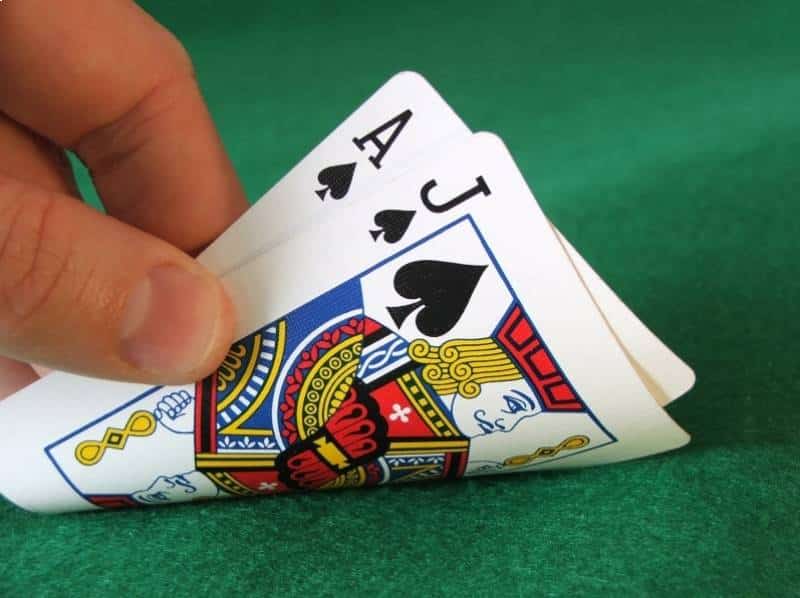
Its aim fits in one sentence: beat the dealer’s total without going over 21. Number cards count at face value, court cards count 10, and an Ace counts 1 or 11. A two-card 21 is a blackjack and normally pays 3:2. The dealer has no choices and follows fixed rules, so a new player only needs to make a few decisions each hand.
Simple rules also make the game fast and social. A round at a full table takes a minute or two, players share the same opponent (the dealer), and nobody at the table is playing against anyone else.
4. Blackjack Can Be Beaten, at Least in Theory
Blackjack is the one major casino game where mathematicians proved that skilled players can sometimes get the edge. Edward Thorp’s 1962 book Beat the Dealer showed that tracking the cards that have been played and raising bets when the remaining cards favour the player can turn the edge around. On 1 April 1964, according to the University of California, Irvine Libraries, the Nevada Resort Hotel Association announced stricter blackjack rules in response, and the casinos soon backed down when ordinary players stayed away.
That mystique has fed books, teams and films, from Ken Uston’s card counting teams to the MIT blackjack team and the 2008 film 21. Our history of blackjack covers the full story. In practice, multi-deck shoes, early shuffles and shuffling machines make counting hard today, and techniques like shuffle tracking rarely work. Counting in your head is legal in the US, but casinos in most states can ask a counter to stop playing blackjack; New Jersey is the exception for barring counters.
5. Betting Systems Do Not Change the Maths
Part of blackjack’s appeal is the belief that a clever staking plan can beat it. It cannot. No staking system changes the house edge, because every hand has the same expected loss per dollar bet regardless of what came before. A worked example shows why. Using a Martingale (double after each loss) from a $10 base bet, seven losses in a row require bets of $10, $20, $40, $80, $160, $320 and $640, a total of $1,270 lost to chase a $10 win. Our progressive blackjack betting strategy page runs the full maths.
6. Comps, Tournaments and Variety
Land casinos rate blackjack players by average bet and time played, and award comps such as meals and rooms based on that rating. Because the rating is based on what the casino expects to win, a disciplined basic strategy player can receive comps worth a meaningful share of their expected loss. Ask how the player’s club rates table play before you sit down.
Blackjack tournaments add another angle. Players pay an entry fee and compete against each other for a prize pool rather than against the house, so tournament betting tactics matter more than the house edge.
Finally, there is variety. Live dealer studios offer classic seven-seat tables, unlimited-seat formats and side-bet versions, and our guide to blackjack variations compares the main ones. The rules on each table still decide the maths, so check the payout and the dealer’s soft 17 rule first.
Play It for the Right Reasons
Blackjack is popular because it gives players good value for their entertainment money and a real role in the result. It is still a game with a house edge, and over time the casino wins. Set a budget before you play, only use casinos licensed in your state, and if gambling stops being fun, call 1-800-MY-RESET (1-800-697-3738).
Blackjack Popularity: FAQ
Why is blackjack so popular?
It offers one of the lowest house edges in the casino (about 0.5% with basic strategy at a 3:2 table), simple rules, and decisions that genuinely affect results. It also has a reputation, dating back to Edward Thorp’s 1962 book Beat the Dealer, as a game skilled players can sometimes beat.
Is blackjack the most popular casino table game?
By number of tables, yes. In Nevada in 2025, 1,947 of 3,782 table games (51.5%) were blackjack, according to UNLV’s Center for Gaming Research. Baccarat earns casinos more money, but blackjack has more tables than baccarat, roulette and craps combined.
How much do casinos win from blackjack?
Nevada casinos won about $1.2 billion from blackjack in 2025, roughly 30% of all table game win in the state, according to Nevada Gaming Control Board figures compiled by UNLV. That was down 10.51% from 2024.
What is the house edge in blackjack?
About 0.5% at a standard eight-deck table that pays 3:2 on blackjack, with the dealer standing on soft 17, if you use basic strategy. A 6:5 payout adds about 1.39 percentage points, and a dealer who hits soft 17 adds about 0.22 points.
Has blackjack become less popular?
Its share has fallen. In 1985, 81% of Nevada’s table games were blackjack and it took more than half of all table win; in 2025 it was 51.5% of tables and 30% of win. Baccarat has out-earned blackjack in Nevada since 2010.
Can betting systems make blackjack more profitable?
No. No staking system changes the house edge. A Martingale from a $10 bet needs $1,270 in total stakes to survive seven straight losses, all to win $10.