
Blackjack grew out of the old European card game twenty-one. The first written reference is a Spanish game called veintiuna in a story by Miguel de Cervantes, published in 1613. France’s vingt-et-un appears around the 1760s, and it reached Britain and then America, where it was renamed blackjack around the start of the 20th century. Its modern form took shape in Nevada after gambling was legalised in 1931, and mathematicians cracked it in the 1950s and 1960s. Since 2013 it has also been dealt live online to players in US states. This timeline covers each step, with sources, and flags the stories that do not hold up.
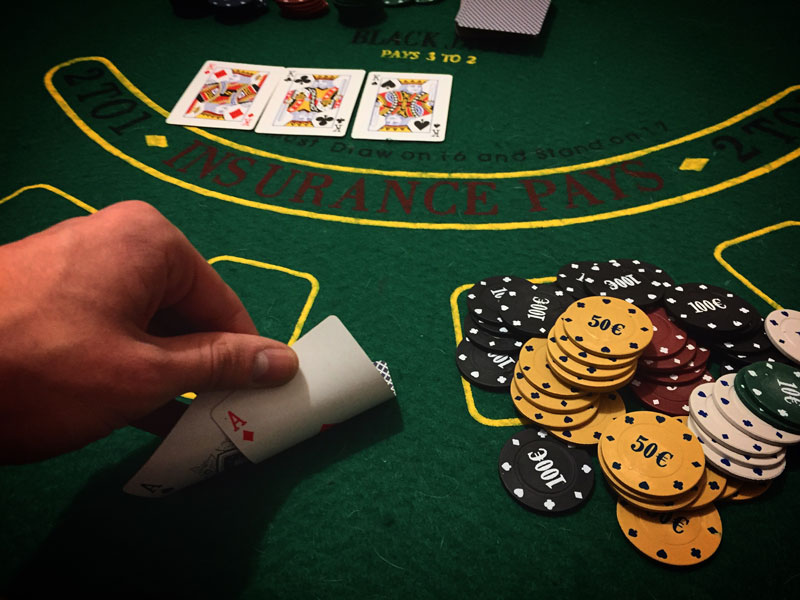
Blackjack History at a Glance
| Date | Event |
|---|---|
| 1613 | Cervantes’s story “Rinconete y Cortadillo” mentions veintiuna (twenty-one) played in Seville |
| c. 1760 | Vingt-et-un first appears in France |
| 1772 | The Duchess of Northumberland records playing “Vingt et un” in her diary |
| 1800 | Rules for vingt-un published in Britain |
| 1825 | First American rules, a reprint of the English rules |
| c. 1899 to early 1900s | The American variant becomes known as blackjack |
| 19 March 1931 | Nevada legalises casino gambling (Assembly Bill 98) |
| September 1956 | Baldwin, Cantey, Maisel and McDermott publish the first accurate basic strategy |
| January 1961 | Edward Thorp publishes “A Favorable Strategy for Twenty-One” in PNAS |
| 1962 | Thorp’s Beat the Dealer is published |
| 1 April 1964 | The Nevada Resort Hotel Association announces stricter blackjack rules; players stay away and the rules are reversed |
| 1979 | The MIT blackjack team begins |
| 1982 | Uston v. Resorts International: New Jersey casinos cannot bar card counters |
| 1994 | Antigua and Barbuda’s Free Trade and Processing Act opens the door to licensed online casinos |
| 2002 | The Blackjack Hall of Fame is launched |
| 2006 | Evolution is founded and begins live dealer casino production |
| 26 November 2013 | Regulated online casinos, including blackjack, go live in New Jersey |
| 17 August 2018 | Evolution opens its first US live casino studio, in Atlantic City |
Twenty-One in Spain and France
The oldest known description of a twenty-one game comes from Spain. In Cervantes’s story “Rinconete y Cortadillo”, part of his Novelas Ejemplares (1613), two young card sharps in Seville play veintiuna. Card game historian David Parlett notes that in this early version the Ace counted only as 1, not 1 or 11 as it does today. Wikipedia’s history of the game says the story was written around 1601 to 1602, which suggests the game existed in Castile by the early 17th century.
France gave the game the name most players know. According to Parlett, vingt-et-un first appears in 18th-century France around 1760; it is absent from earlier editions of the standard French book of games, the Académie des Jeux. Claims that the game was invented in French casinos in the 1700s, or that a particular French noble played it, are popular but undocumented.
Relatives of Twenty-One
Twenty-one belongs to a family of “adding up” card games. Two older or parallel relatives are often mentioned:
- Thirty-One (trente-et-un), where the target is 31 points, dates back to the 1460s according to Parlett.
- Seven and a half (sette e mezzo), an Italian game played with a 40-card pack, where court cards count a half point and the target is 7.5.
Neither is a direct ancestor that can be proven, but both show the same idea: get close to a target total without going over.
Vingt-Un in Britain and Pontoon
The game crossed the Channel in the 18th century. Parlett cites the Duchess of Northumberland recording games of “Vingt et un” in her diary in 1772, and Jane Austen mentions it in her unfinished novel The Watsons (around 1804 to 1805). Wikipedia notes that formal rules were published in Britain in 1800 under the name vingt-un. By the First World War, British players called their version pontoon, probably a corruption of the French name, and pontoon remains a distinct game with its own rules.
How Blackjack Got Its Name
Twenty-one reached the United States in the early 1800s. The first American rules, from 1825, were a reprint of the 1800 English rules. Over the following decades the American game developed its own features, including the dealer acting as a fixed banker who plays by set rules.
The famous explanation for the name is that gambling houses paid a bonus, often quoted as 10 to 1, for a hand of the Ace of spades and a black Jack, and that the name stuck after the bonus was dropped. Parlett points out that there is no documentary evidence for this story. Wikipedia records an alternative theory from historian Thierry Depaulis: that prospectors in the Klondike Gold Rush (1896 to 1899) applied the name, possibly after a mineral they called blackjack. What is clear is that “blackjack” replaced the older names in the US around the turn of the 20th century. Gambling author John Scarne claimed to have seen “Blackjack pays odds of 3 to 2” printed on Chicago layouts by 1919, though Parlett notes this is hearsay.

Nevada and the Modern Game
Blackjack’s rise as the leading casino table game in the US starts with Nevada. Governor Fred Balzar signed Assembly Bill 98 on 19 March 1931, legalising wide-open casino gambling and ending a ban in place since 1909. Within weeks Clark County licensed its first gaming businesses. Blackjack, or twenty-one as it was often still called, was dealt in those early clubs and spread with the casino industry.
The rules in Nevada’s casinos settled into the form most players know today: the player acts first and loses on a bust even if the dealer busts later, which is the root of the house edge; a natural pays 3:2; and players may double down and split pairs. Those player options are what make strategy matter, and they would soon attract mathematicians.
The Four Horsemen and Basic Strategy (1956)
In September 1956, Roger Baldwin, Wilbert Cantey, Herbert Maisel and James McDermott, four men working at the US Army’s Aberdeen Proving Ground, published “The Optimum Strategy in Blackjack” in the Journal of the American Statistical Association. Working with mechanical desk calculators, they produced the first mathematically sound basic strategy, showing that correct play cut the house edge to a fraction of a percent. They became known as the Four Horsemen and were inducted together into the Blackjack Hall of Fame in 2008.
Their work is the ancestor of every basic strategy chart in use today. Modern live tables still run on the same idea, as our guides to hitting, splitting pairs and surrendering show.
Edward Thorp and Beat the Dealer (1961 to 1964)
Edward O. Thorp, a mathematician, took the Four Horsemen’s work further by asking how the odds change as cards leave the deck. His paper “A Favorable Strategy for Twenty-One” appeared in the Proceedings of the National Academy of Sciences in January 1961. In 1962 he published Beat the Dealer, which set out a card counting system known as the ten count and showed that a player could gain an edge in single-deck games by tracking the cards and raising bets when the remaining deck favoured the player.
The casinos reacted. According to the University of California, Irvine Libraries’ exhibit on Thorp, on 1 April 1964 the Nevada Resort Hotel Association announced changes to the rules: splitting pairs and doubling down were restricted and the cards were reshuffled after only a couple of deals. The changes raised the house edge, ordinary players stopped playing, and the casinos soon went back to the old rules. Casinos have used other countermeasures ever since, such as more decks, earlier shuffles and, later, shuffling machines.
Card Counters, Teams and the Courts
Thorp’s book created the advantage-player community. Some of its best-known figures and events:
- Team play: Al Francesco is credited with founding the concept of blackjack teams, and Ken Uston, who played on Francesco’s team, popularised it in books such as The Big Player (1977).
- Uston v. Resorts International (1982): after Uston was barred in Atlantic City, the New Jersey Supreme Court held that the casino had no authority to exclude him for card counting without a Casino Control Commission rule. New Jersey casinos still cannot bar counters, so they added decks and moved shuffle points up instead.
- The MIT blackjack team (1979 onward): the team began when friends of J.P. Massar took an MIT course called “How to Gamble If You Must”. Bill Kaplan joined in May 1980, and in June 1992 Kaplan, Massar and John Chang formed Strategic Investments to raise money for team play. Ben Mezrich’s Bringing Down the House (2003) and the 2008 film 21 made the team famous, though Mezrich has acknowledged that many characters are composites.
- The Blackjack Hall of Fame (2002): launched at Barona Resort and Casino in California, it inducted seven members in its first year, including Thorp, Uston, Francesco and Arnold Snyder.
Advanced techniques followed, from team play to shuffle tracking and exploiting exposed hole cards. Our guide to hole card vs no hole card blackjack explains why many casinos deal the dealer’s second card the way they do.
Blackjack Goes Online
The internet gave blackjack its next big change. In 1994 Antigua and Barbuda passed its Free Trade and Processing Act, which allowed licences for online gambling businesses, and Microgaming was founded the same year. Which site was the first true online casino is disputed: InterCasino, launched in 1996, is often named, while other accounts credit Microgaming’s The Gaming Club. Either way, RNG blackjack, where software deals from a virtual shoe, was among the first games offered.
Live dealer blackjack came next. Evolution, founded in 2006, built its business on streaming real dealers from a studio, and live blackjack became its core game. In the US, regulated online casino play began in New Jersey on 26 November 2013, and Evolution opened its first US live casino studio in Atlantic City on 17 August 2018. As of October 2026, eight states have legalised online casinos; seven markets are live (NJ, PA, MI, WV, CT, DE, RI), and Maine has legalised a tribal-only market that has not yet launched.
Blackjack Today
Wikipedia describes blackjack as the most widely played casino banking game in the world. Modern versions range from classic seven-seat tables to unlimited-seat formats and side-bet variants, and the rules on each table still decide the maths. A 6:5 payout or a dealer who hits soft 17 raises the house edge, while a classic 3:2 table with basic strategy keeps it near 0.5%, as our live blackjack guide explains. For the reasons players keep coming back, see why blackjack is so popular.
If you play, play at casinos licensed in your state and set limits before you start. If gambling stops being fun, call 1-800-MY-RESET (1-800-697-3738).
Myths About Blackjack History
- “Blackjack was invented in French casinos in the 1700s.” The French name dates from about 1760, but the Spanish veintiuna is older.
- “The name comes from a 10:1 bonus for the Ace of spades and a black Jack.” A popular story with no documentary evidence, according to Parlett.
- “The Four Horsemen were ignored until 2008.” In fact their 1956 paper and 1957 book were published openly and Thorp built on them; 2008 is simply the year of their Hall of Fame induction.
- “The first online casino opened in 1995 with poker.” The licensing framework dates from 1994, InterCasino is commonly dated to 1996, and the first real-money online poker room came later.
History of Blackjack: FAQ
Where did blackjack originate?
Blackjack comes from the European game twenty-one. The oldest written reference is the Spanish veintiuna in a Cervantes story published in 1613; the French vingt-et-un appears around 1760, and the game reached Britain and then the United States, where it became blackjack.
Why is it called blackjack?
Nobody knows for sure. The popular story of a 10:1 bonus for the Ace of spades with a black Jack has no documentary evidence, according to card game historian David Parlett. Historian Thierry Depaulis has suggested the name came from Klondike Gold Rush prospectors in the late 1890s.
Who invented basic strategy?
Roger Baldwin, Wilbert Cantey, Herbert Maisel and James McDermott, known as the Four Horsemen, published the first accurate basic strategy in the Journal of the American Statistical Association in September 1956. They were inducted into the Blackjack Hall of Fame in 2008.
When did card counting start?
Edward Thorp published the first proven counting method in a January 1961 PNAS paper and in his 1962 book Beat the Dealer, which described the ten count. Casinos responded on 1 April 1964 with stricter rules, then reversed them when players stayed away.
Is card counting illegal?
No. Counting cards in your head is not illegal under US law, but using a device is, and casinos in most states can bar or back off counters. New Jersey casinos cannot bar counters because of the 1982 Uston v. Resorts International decision.
When did live dealer blackjack start?
Evolution, founded in 2006, built the live dealer casino market. In the US, online casino play launched in New Jersey on 26 November 2013, and Evolution opened its first US live studio in Atlantic City on 17 August 2018.
Sources
- David Parlett: History of card games, Blackjack / Vingt-un
- Wikipedia: Blackjack (history, name origin, Depaulis, 1956 paper)
- The Mob Museum: Nevada marks 90th anniversary of legal gambling (AB 98, 19 March 1931)
- Thorp, E. O. (1961) A Favorable Strategy for Twenty-One, PNAS 47(1):110-112
- Wikipedia: Beat the Dealer (1962, ten count)
- UC Irvine Libraries: Edward O. Thorp exhibit, response to Beat the Dealer (1 April 1964)
- Wikipedia: Blackjack Hall of Fame (2002 launch, Four Horsemen 2008)
- Wikipedia: Ken Uston (The Big Player 1977, Uston v. Resorts 1982)
- Wikipedia: MIT Blackjack Team (1979, Strategic Investments 1992, Bringing Down the House 2003, 21 2008)
- Evolution: first USA live casino studio, Atlantic City (17 August 2018)
- Evolution: company timeline (founded 2006)
- NCPG: National Problem Gambling Helpline (1-800-MY-RESET)
Spotted an error? Email [email protected] with the page address. Verified corrections are made with a dated note.